
Diastasis Recti Abdominis (DRA): why The Gap Isn't the Goal
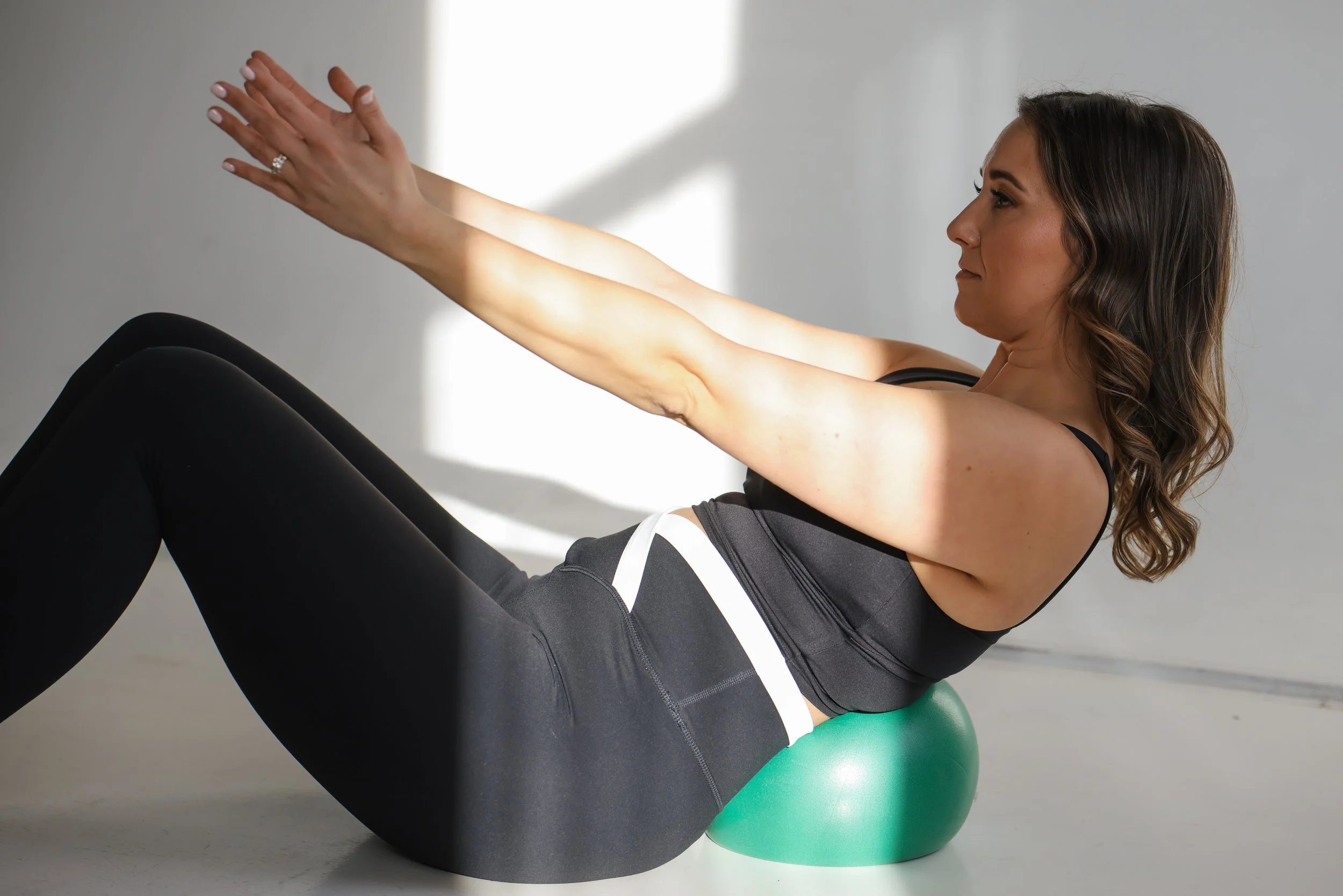
If you've Googled Diastasis Recti (DRA) even once, you've probably landed on a wall of conflicting advice: no crunches, ever; avoid planks; don't lift heavy or you’ll hurt yourself; close the gap before you do anything else!
It's exhausting, and honestly, most of it isn't backed by the research it claims to be. Let's actually look at what the studies say, because the real story is a lot more freeing than the internet makes it sound.
The Gap Isn't the ‘end all be all’
Here's the belief almost everyone starts with: a wider gap between your “6-pack” abdominal muscles (the inter-recti distance, or IRD) means a weaker, more dysfunctional core, and the goal of any core program should be shrinking that number. It makes intuitive sense. It's also not what a well-designed study found.
Researchers looked at postpartum women with diagnosed diastasis recti and measured their IRD against actual functional impairment (things like difficulty running, doing heavy work, or exercising). In the simple analysis, gap width did track loosely with a few of those activities. But once they controlled for other factors like BMI and parity (# of times someone has given birth), that connection disappeared. Their conclusion: IRD alone isn't a good enough predictor of who's actually struggling day-to-day. In other words, two women can have the exact same gap width, and one can be strong, coordinated, and pain-free while the other can't lift a laundry basket. The millimeters [of IRD] aren't telling you the whole story.
What the "No Crunches" Rule Gets Wrong
A randomized controlled trial (Gluppe et al., 2023) put the "never do curl-ups with DRA" rule to the test directly. Postpartum women with diagnosed DRA followed a 12-week program that included head lifts, curl-ups, and twisted curl-ups (think of the bicycle ab exercise) — the exact exercises women are so often told to avoid. The result: the gap didn't get wider. It didn't budge either way. What did change was real strength — rectus abdominis thickness and abdominal strength both improved measurably.
A separate trial looked at transversus abdominis-focused (deep abdominal layer) exercises versus rectus abdominis-focused (“6-pack” abdominal muscles) exercises versus general exercise during pregnancy, and found the same reassuring pattern: neither protocol worsened IRD or pelvic floor symptoms. The researcher's own takeaway, in her words, was that this adds evidence for a nuanced approach instead of a blanket restriction.
So the "safe exercise list" so many women get handed isn't just overly cautious — for a lot of women, it may be actively unnecessary.
So What Does Actually Matter
If gap width isn't the main event, what is? This is where it gets more interesting than a measurement. Research on core training more broadly (largely in athletic and rehab populations) points to coordination, endurance, and load tolerance — how well your trunk manages force and pressure during real movement — as the more meaningful markers, rather than isolated muscle engagement or a single strength test. Reviews looking at "core stability" measures have consistently found that things like plank hold time or basic endurance tests correlate weakly with how someone's body actually performs under real demand. Your core isn't a muscle you flex in isolation, it's a pressure-management system that has to work your breath, your pelvic floor, and your whole trunk, together, under a load that's specific to life (chasing a toddler, deadlifting, getting off the floor, running, etc).
That's the piece that gets lost when a program is just a list of "approved" exercises. Real core function is built through progressive load and pattern practice, not through avoiding movement until a gap closes.
Why "Just Do These Safe Exercises" Falls Short
Most postpartum core programs hand you a short list and a strict timeline: week 1 do this, week 6 progress to that, regardless of how your body is actually responding. But the research above points to something different: progression should be driven by what your body can actually control and tolerate, not a calendar. A gap that hasn't visibly closed doesn't mean you're failing or stuck. It means gap width was never the metric that mattered most. This is precisely one of the reasons I designed an online program that does just this!
Bottom Line
Diastasis recti isn't a life sentence, and it isn't something you fix by avoiding movement until, you hope, a number shrinks. The research is honestly on your side here: targeted abdominal exercise, including the ones you've probably been told to fear, doesn't worsen the gap, and it does build real strength. What actually predicts how your core performs in daily life is coordination, endurance, and progressive load tolerance, not inter-recti distance alone.
This is exactly the gap (pun intended) I built The Midline Project to close. It's a research-informed program that skips the fear-based restriction lists and the arbitrary week-by-week timelines, and instead walks you through 35+ exercises and a functional progression built around how your whole core system actually works — whether you're 6 weeks or 6 years postpartum, recovering from surgery, or just tired of not trusting your own body to move. It's a one-time purchase with lifetime access, so you can move at your own pace and come back to it whenever you need. If you're ready to stop chasing a number and start rebuilding real strength and confidence, check out The Midline Project here.
Research References
Association Between Inter-Recti Distance and Impaired Abdominal Core Function in Post-Partum Women With Diastasis Recti Abdominis.Read full text
Gluppe, S. B., Ellström Engh, M., & Bø, K. (2023). Curl-up exercises improve abdominal muscle strength without worsening inter-recti distance in women with diastasis recti abdominis postpartum: a randomised controlled trial. Journal of Physiotherapy, 69(3), 160–167. Read abstract
Abdominal exercises and inter-recti distance — Australian Physiotherapy Association interview on RCT findings for transversus abdominis and rectus abdominis exercise during pregnancy. Read full text
Reed, C. A., Ford, K. R., Myer, G. D., & Hewett, T. E. (2012). The Effects of Isolated and Integrated "Core Stability" Training on Athletic Performance Measures: A Systematic Review. Sports Medicine, 42(8), 697–706. Read full text
This post is for educational purposes and isn't a substitute for an individualized evaluation.
